Why this exists
Try to connect what you ate for lunch last Tuesday with how you felt that afternoon. You may not even remember the lunch, because most of us eat several times a day on autopilot. So when your gut starts pushing back, food is an easy suspect to miss.
To see whether food is irritating your gut, you need many meals on record next to how you felt after them. That record survives only if logging keeps pace with your day, which means a meal has to take seconds rather than minutes. GI Studio began with a food record I could not keep myself, a story told in Track 01.
Where people get stuck
Writing down every ingredient of every meal is slow work, so the entry waits until later and often never happens. One reviewer of another tracking app put the problem in seven words: "too many clicks to make one entry." Every skipped meal leaves a gap in the record. A record full of gaps can hide the pattern you came to find.
Ten seconds, start to finish
Snap a photo, say what you ate or type it. GI Studio breaks the meal into ingredients and checks each one against a database of FODMAP entries, with nothing for you to tag. The goal is about 10 seconds from opening the app to a logged meal.
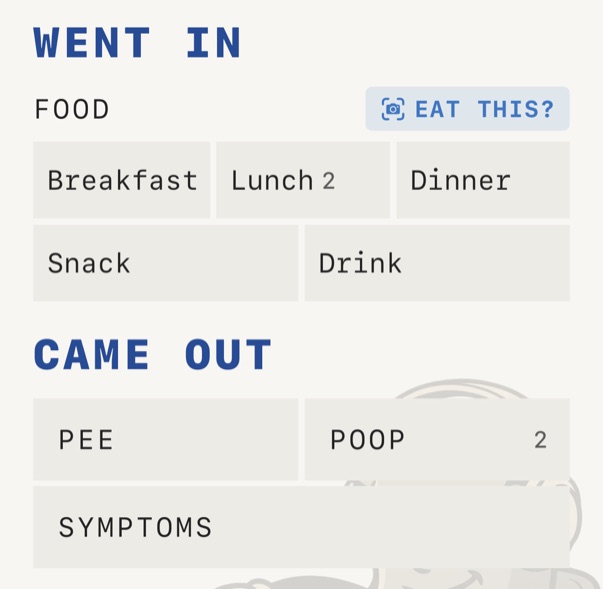
The home screen beside this page is mine. Each meal starts with one tap under WENT IN. What comes out goes under CAME OUT on the same screen. One of my lunches was a bowl of chicken and rice with soy sauce, logged from a photo. The app listed each ingredient and flagged none of them.
When a meal does carry FODMAPs, GI Studio names the ingredient behind each flag. Its database files garlic under fructans and regular yogurt under lactose. If the app misreads something you fix it on the same screen, since the ingredient list is plain text you can edit.
What FODMAP means
FODMAP names a group of carbohydrates that the small intestine absorbs poorly. They pull water into the gut, where bacteria ferment them into gas. The water and gas stretch the bowel, which a sensitive bowel feels as bloating and pain.
Fructans and lactose are different sugars found in different foods. Knowing which group an ingredient belongs to tells you where to look next.
What GI Studio leaves out
GI Studio does not count calories or tally every macronutrient. A photo cannot show how much oil went into the pan or how much rice sits under the chicken, so we switched calorie estimates off. The research on photo estimates is on our page asking whether food tracking apps work.
Where it leads
A GI dietitian can help you read that record, but many people working this out do not have one yet. GI Studio keeps the record so that whenever you do find one, the two of you start from a month of meals instead of a memory. The first entry is your next meal.